
preventing deep vein thrombosis (DVT) via intermittent pneumatic compression (IPC).
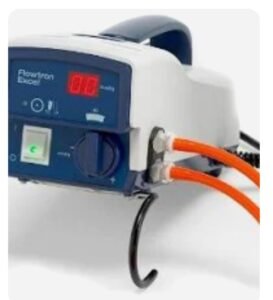
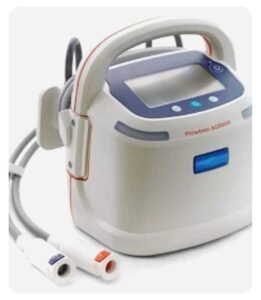
a device used for preventing deep vein thrombosis (DVT) via intermittent pneumatic compression (IPC). Here’s a breakdown of what it is, how it works, key specifications, and what to look out for if you plan to purchase or use one in India (Mumbai / Maharashtra).
—
✅ What is it & why use it
The Flowtron ACS900 is a mechanical prophylaxis system for preventing venous thromboembolism (VTE) / deep vein thrombosis in patients who are immobile, post-surgery or at risk.
It uses “intermittent pneumatic compression” (IPC): cuffs (garments) are applied to the leg (foot, calf, thigh) and inflated/deflated at intervals to stimulate blood flow and reduce stasis.
The manufacturer (Flowtron / Arjo Huntleigh) describes features like automatic garment recognition, compliance monitoring, quiet operation, comfort fabrics, etc.
—
🛠 Key features & specifications
Here are some of the important specs for the ACS900 and related Flowtron models:
Uniform mode: e.g., ~40 ±5 mmHg for calf/thigh garments. Sequential mode: ~45 ±5 mmHg. Foot garments: ~130 ±10 mmHg.
Compression cycle times: e.g., for uniform/sequential: inflation ~12 s, deflation ~48 s. Foot garments: ~3 s inflate / ~27 s deflate.
The ACS900 supports both uniform and sequential compression in one pump.
Connectivity/Intelligence: The ACS900 includes SmartSense™2 automatic garment recognition and compliance monitoring (which tracks actual wear-time and usage).
Power / size: For example, ACS900 standard: 100-230V, 50-60Hz; size ~ H 230 × W 226 × D 196 mm; weight ~3.8 kg. (From manufacturer specs)
Garments: Different sizes (calf, thigh, foot) with breathable fabrics, Velcro fasteners, clear instructionsinstructions
Given your interest (nursing, advanced skills, patient care), here are contexts where this machine is relevant:
Patients post-orthopedic surgery (hip/knee replacements) who must immobilize — IPC to reduce DVT risk.
Patients in intensive care units (ICUs) or wards who are immobile (sedated, ventilated) and whose prophylaxis includes mechanical methods.
For home-care or step-down care settings where pharmacological DVT prophylaxis may be contraindicated (bleeding risk) and mechanical is used.
For monitoring compliance in high-risk wards: since the ACS900 tracks usage, nurses can monitor which patients have received the therapy.
—
🧩 Advantages & things to check
Advantages
Non-invasive, mechanical method: avoids additional drugs in certain situations.
The automatic garment recognition / compliance monitoring helps documentation and assurance of therapy.
Quiet operation, comfortable garments → better patient compliance.
Flexibility: foot/calf/thigh garments; uniform/sequential modes.
Things to check / considerations
Ensure correct garment size (calf circumference, thigh circumference) and ensure correct fit — improper fit reduces efficacy.
Ensure the pump model supports the required compression mode (uniform vs sequential) for your patient population.
Training of nursing staff on correct placement, monitoring of alarms/non-compliance.
Cleaning / infection control: garments must be cleaned/disinfected or replaced appropriately.
Costs: not only the pump but recurring costs (garments, tubing) and maintenance.
Local service / parts availability in India (Mumbai area) — ensure supplier / vendor support.
Contraindications: Patients with certain vascular conditions (severe arteriosclerosis, acute DVT) may need caution or alternative strategies. (Note: For example, one listing of a Flowtron Excel mentions “Severe arteriosclerosis or other ischaemic vascular diseases” as a condition to consider.
—
📌 How to purchase & what to ask (for Mumbai / India)
Since you are located in Mumbai, Maharashtra, India, here are some practical pointers:
Check for official distributor / authorized dealer of Arjo Huntleigh / Flowtron in India – ensure warranty, service, spare parts.
Ask for quote that includes: pump unit, set of garments (foot/calf/thigh as needed), tubing, warranty, training of staff.
Ask about rental vs purchase options — for some departments/patients you might only need short-term rental.
Confirm availability of consumables (extra garments, tubing sets) locally — avoid long shipping delays.
Ask about service and calibration: periodic check of pump pressures, compliance function, tubing integrity.
Training for nursing staff: correct application of garments, checking for alarms, documenting compliance, ensuring patient comfort.
Ensure that you integrate the usage into your nursing protocols: e.g., plan of care for immobile patients includes initiation of IPC, monitoring every shift, checking for skin integrity under the garment, etc.
- Budgeting: beyond initial cost, consider consumable replacement, maybe rental charges, service cost, staff time.
Conclusion
The Flowtron DVT machine (particularly the ACS900 model) is a high-quality, clinically validated IPC device used for DVT prevention in hospitals and care settings. It aligns well with nursing responsibilities (application, monitoring, documentation, education). For your setting in Mumbai / India you’ll want to ensure local support, correct garment sizes, training, and integrate device use into nursing protocol